
Report Card

Back in May, the Tiller Project received: two teams of electricians, spring weather, 2600 lbs. of handcrafted Moroccan tiles, black flies, and me and Ned. The walls were closed up and it was, both at long last and astonishingly already, time to work on finishes.
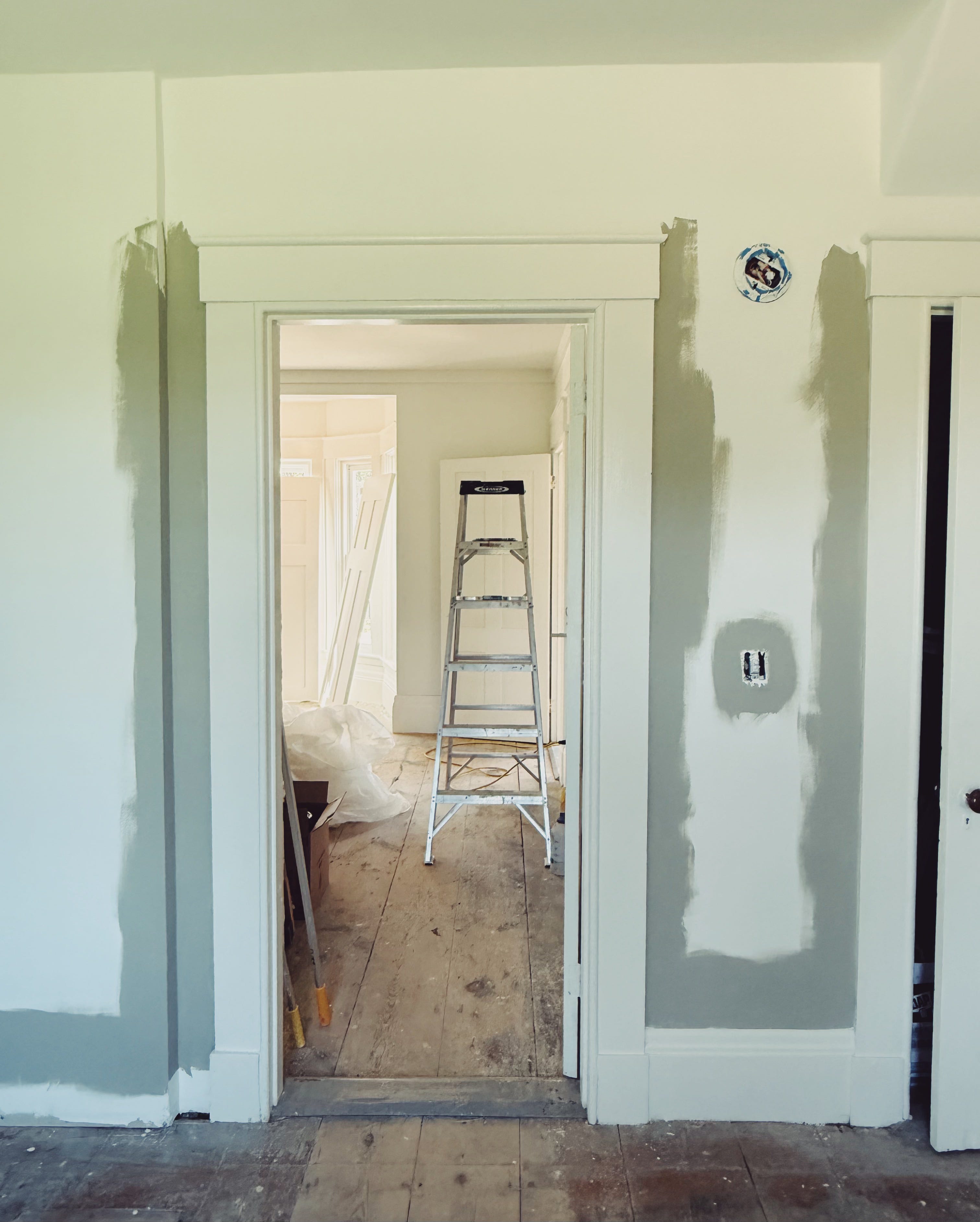
There had been a certain satisfaction to peeking into the walls of the house when they were open. The layers of wallpaper, the framing made with tree trunks, the char from the chimney fires of yesteryear, the knob and tube, the blank spaces where the insulation should have been but wasn’t and the rodents shouldn’t have been but certainly were. The open walls coughed up occasional treasures too: brittle newspapers and magazines, lost toys, and - one of the final ephemera of spring - a smudgy 1923 Bates College report card, sent to Bert J. Dunphy, whose son Wilbur appears to have struggled mightily in Chemistry.
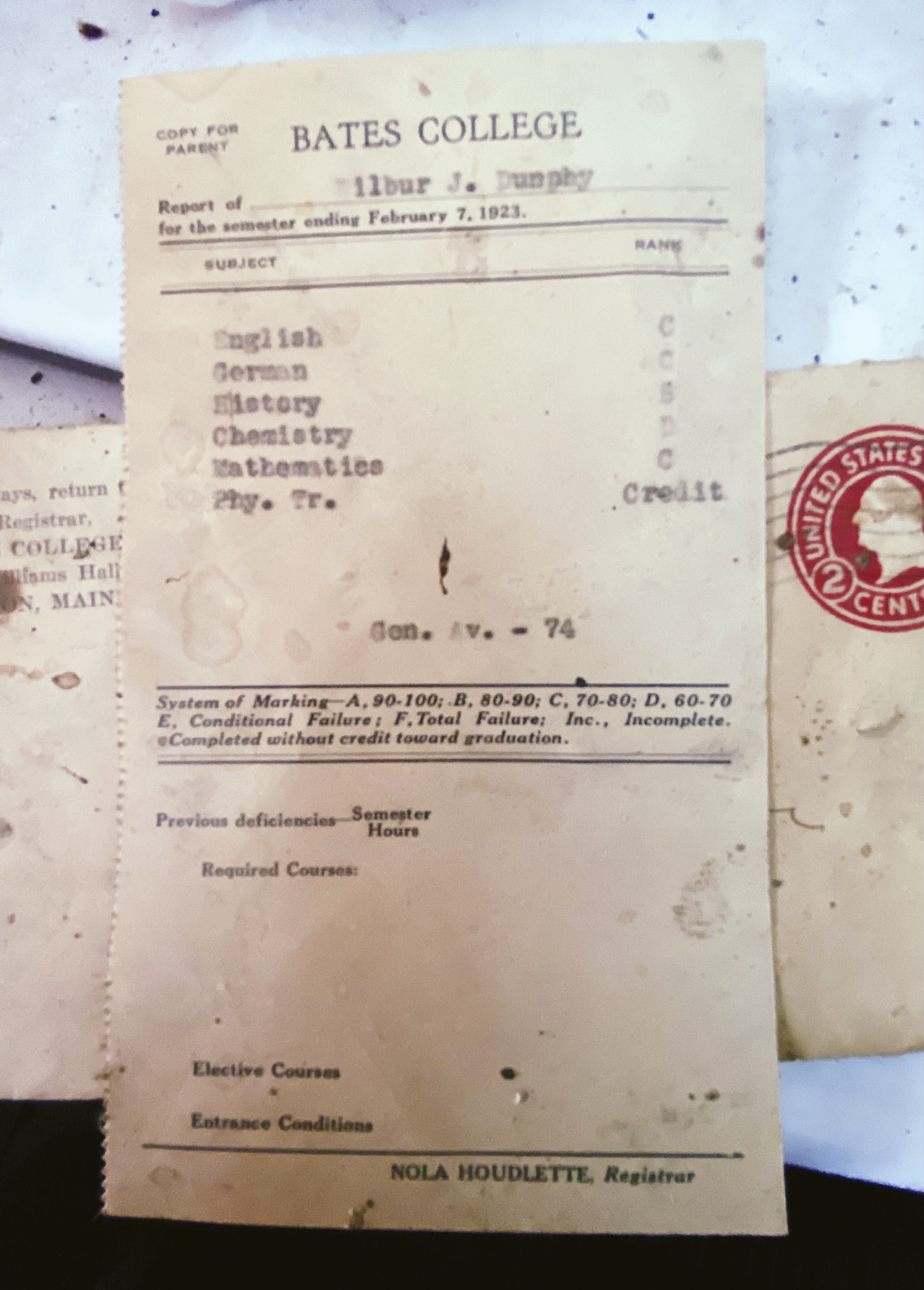
(College grades aren’t sent to parents these days, but that’s pretty new. Last summer my parents produced a dossier they had been keeping on me for decades: letters I sent home, programs from significant sporting events, an invitation to various commencement exercises. A paper trail, kept inside a blank-tabbed manila folder. My people love a manila folder. Mid-file, one thin and small receipt of academic achievement: a college report card, sent to my parents, whose daughter appears to have struggled mightily in Physics.)
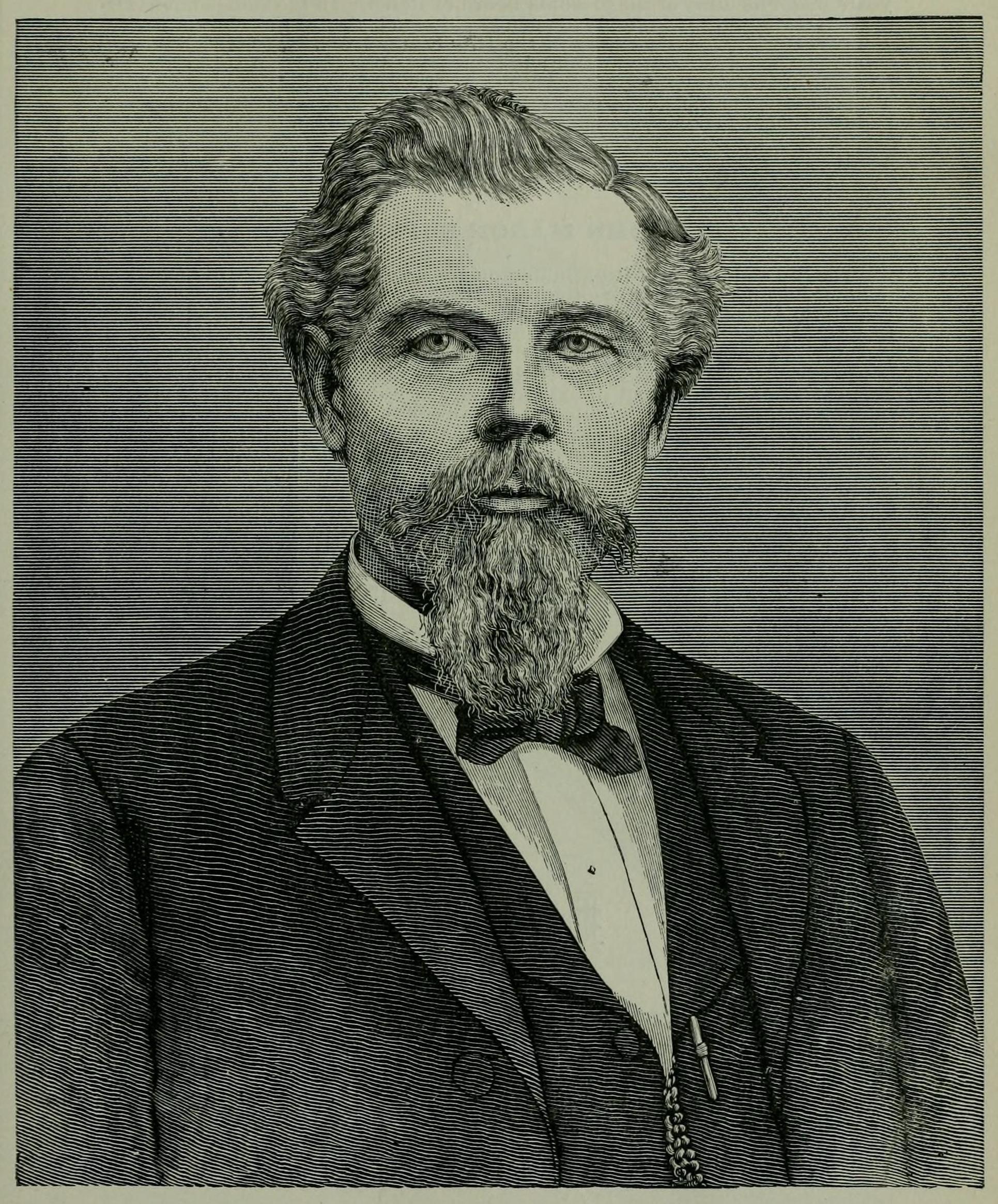
And, on the boards inside the wall where the insulation should have been was etched the signature of Nathan Weston Spaulding.
You’re probably thinking Nathan Weston Spaulding? The Nathan Weston Spaulding? and my friends, the answer is YES. The Nathan Weston Spaulding, the one with his very own wikipedia page, left his mark on our Tiller Project before heading off to California in 1851. He was looking for gold but what he found was a career in sawmill innovation, and then one in public service. He was a patent holder, a mayor of Oakland, a trustee of Stanford University, a US Treasurer. He was a father of ten and a Mason of the highest order. He ran for re-election unopposed! He never lost a cent! His chisel bit saws had no equal! He was a grand high priest! I mentioned these tidbits one day in May once the walls were closed up and the place was abuzz with craftspeople installing and mudding and painting and trimming out the place.
That explains it, says JD, the finish carpenter on the construction crew. The Freemasons have a certain kind of math, magic numbers and ratios and such, and they’re reflected in the house number, the geometry of the place, the layout. According to JD, in a good way. You should join, JD says to me kindly, and amazingly remains kindly as I ask whether the Masons are a cult and whether they admit women. (JD said: They’re not. Depends. So.)
Through the summer, the jobs assigned to me and Ned included: staying out of the way, painting, tiling, making quick decisions about small details, and maintaining composure when the move-in date extended from May to June to the very, very end of July. First World Problems! I would say, sometimes through gritted teeth. August is going to be awesome! Ned would say, usually up to his elbows in mortar. We were both right, but none of these truths felt like good fodder for a post. The summer was just what it needed to be - lots of finishing, not much funny - and I could find nothing to write.
I started to trace the property records of the house back to Spaulding’s childhood, but it’s not done yet. Also not yet done: the reinstallation of the refurbished bathroom window, the hanging of replacement wallpaper, the reconstruction of the back terrace mauled by the big machines as they set new foundation under the ell. But the floors are sanded and sealed, the bathrooms are tiled, the basements and attics are insulated, the kitchen is operational. Do we deserve this bounty? Probably not, but each morning as I make dark roast in the slow percolator and watch the mist burn off the river just as slowly, even my routine harsh self-grading can’t compete with the quiet view, with the noise of birds and crickets.
Recently, Ned heard a knock at the door and an elderly lady announced herself as having lived in the house when she was a kid. Ned, who is not hard of hearing, invited her in and asked for more details, and the lady, who apparently is, mostly narrated her own Project tour without regard to his inquiry, providing her nickname (they call me Pickle), some recreational history (we had a sandpit near the spring, for wrastling) and enigmatic design feedback (this sure is different).


Different the Tiller Project sure is. Not totally done, what with the to do lists still so long and new characters still emerging from the woodwork and arriving on the front porch. But it is different enough to ask the universe, ask myself: could this be the end of the story? (And: could this question be what I couldn’t bring myself to write all summer?)
These seem to be hard questions to answer. Not as hard as why is hope difficult sometimes or why are we so divided, but still: hard. Partly because when it comes to writing, I have a lot to learn. But mostly because of you. For the whole Tiller Project - for eighty posts! for over five years! - you have encouraged and LOL’d and copy-edited me, sending book recommendations, gardening tips, quoting me back to me; all of it sustaining, amazing, hilarious. Do I deserve you? Probably not. But your reading along means the world, motivates, makes it a little easier to hopeful, which might sound a little dramatic but sorry pals: it’s true. So. Thank you. Bless you. And no pressure, but if you’ve got edits, notes, good jokes, topics about which you demand to know more, send ‘em. Hard questions are worth a wrastle. Grades won’t close for a while.
I'm not sure this is the end of this story. Aside from the to-do lists and whatnot, it feels to me like a spectacular BEGINNING. Xoxo and, for the love of God, keep writing.
Cosign on Amanda's comment!